
Immunosurveillance of Breast Glands with Oncogenic Germline Mutations
PI: Shadmehr Demehri, MD, PhD
Institution: Massachusets General Hospital
Project Number: UG3CA290300
The main goal of this research is to harness
the immune system to prevent breast cancer in people with BRCA mutations. While
immunotherapy has been successful in treating advanced cancers by reactivating the
body’s immune response, this study focuses on stopping cancer before it starts.
Specifically, Dr. Shadmehr Demehri's team aim to uncover how the immune system can
protect normal breast tissue and prevent precancerous cells in BRCA mutation
carriers from turning into invasive cancer.
This project offers a unique opportunity to discover new immune mechanisms that could be applied to both cancer prevention and treatment in this high-risk group. To achieve early interception - stopping cancer before it spreads, the team will study how immune cells become activated in BRCA-mutant breast tissue.
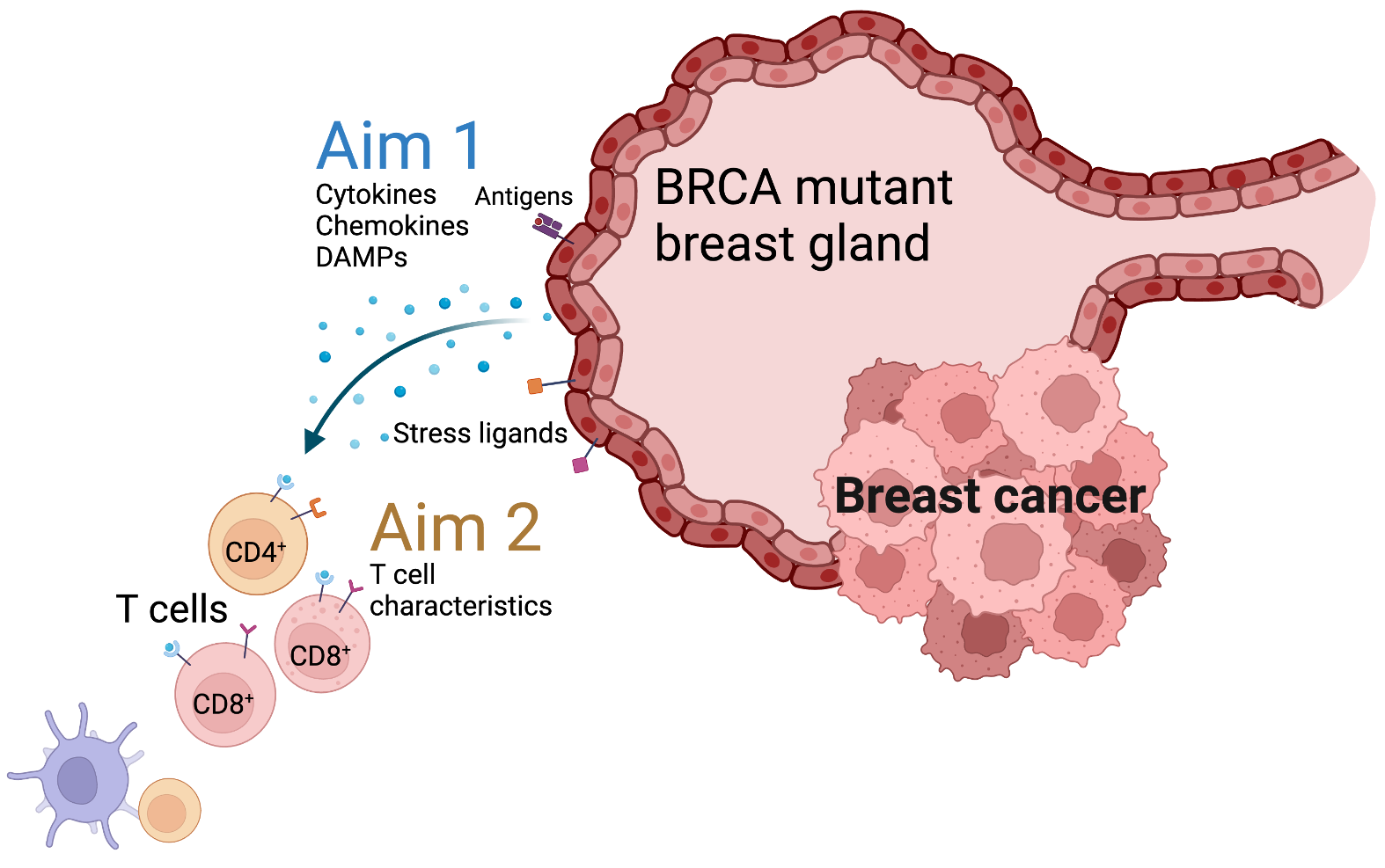
The research will pursue the following aims:
Scientific Focus within CIP-Net
The study directly aligns with the CIP-Net’s mission to translate discoveries in immune biology into preventive strategies for high-risk populations. It represents a precision immunoprevention approach using the body’s immune system to intercept cancer at its earliest biological stages, well before tumor formation.
Public Health Relevance
Understanding how the immune system naturally protects BRCA-mutant tissues could inform new preventive interventions that reduce cancer incidence among genetically predisposed individuals. The work contributes to a growing national effort to shift from cancer treatment toward cancer interception and prevention through immunology.
This project offers a unique opportunity to discover new immune mechanisms that could be applied to both cancer prevention and treatment in this high-risk group. To achieve early interception - stopping cancer before it spreads, the team will study how immune cells become activated in BRCA-mutant breast tissue.
The research will pursue the following aims:
- Aim 1. Determine the immunogenic signals that drive T cell response in BRCA mutant breast glands (UG3).
- Aim 2. Investigate the nature of T cells residing in BRCA mutant breast glands (UG3).
- Aim 3. Determine the function of T cells infiltrating BRCA mutant breast glands (UH3).
- Aim 4. Harness BRCA mutant breast gland-infiltrating T cells for breast cancer immunoprevention.
Scientific Focus within CIP-Net
The study directly aligns with the CIP-Net’s mission to translate discoveries in immune biology into preventive strategies for high-risk populations. It represents a precision immunoprevention approach using the body’s immune system to intercept cancer at its earliest biological stages, well before tumor formation.
Public Health Relevance
Understanding how the immune system naturally protects BRCA-mutant tissues could inform new preventive interventions that reduce cancer incidence among genetically predisposed individuals. The work contributes to a growing national effort to shift from cancer treatment toward cancer interception and prevention through immunology.
 Shawn Demehri, MD, PhD
 Leif Ellisen, MD, PhD
 Nir Hacohen, PhD
 Alexandra Fauvre, PhD
 Xutu Zhao, MD
 Marjan Azin, MD
 Danielle Conrad
 Connie Yu
 Ethan Millard
 Stergiani (Stella) Telliou